Solutions
Improve Power Quality
Reduce phase imbalance, stabilize voltage, and deliver more consistent power across your distribution circuits.
Switched Source’s devices use power electronics to reduce neutral current and voltage imbalance at the source, responding automatically as loads, generation, and feeder conditions change.
Imbalance Affects the Entire Circuit
When phases carry unequal load, current returns on the neutral and voltage drop increases on the most heavily loaded phases.
Neutral current drives losses and accelerates wear on distribution equipment. Voltage drop leaves customers at the end of the circuit near or below the lower voltage limit. It also forces voltage regulators to work against the spread between phases, using correction range that would otherwise be available to hold the circuit as load changes. Because imbalance shifts with load, corrections made once lose effectiveness as conditions change.
Call us when...
Your reclosers keep tripping on neutral overload.
Customers are having issues with power quality.
Stray voltage is a concern on a circuit with high neutral current.
What You Unlock Over Traditional Solutions
Most power quality equipment treats the symptom. Voltage regulators and capacitor banks hold levels within range while the imbalance itself remains, so neutral current and the equipment stress that comes with it continue.
Switched Source technology continuously corrects the imbalance. Neutral current is reduced, voltage across the three phases converges, and the capacity that imbalance was consuming becomes usable again. Because the device responds dynamically to changing system conditions rather than being set once, the correction holds through the day and across seasons.
Taming Extreme Imbalance in West Texas
CASE STUDY · WEST TEXAS
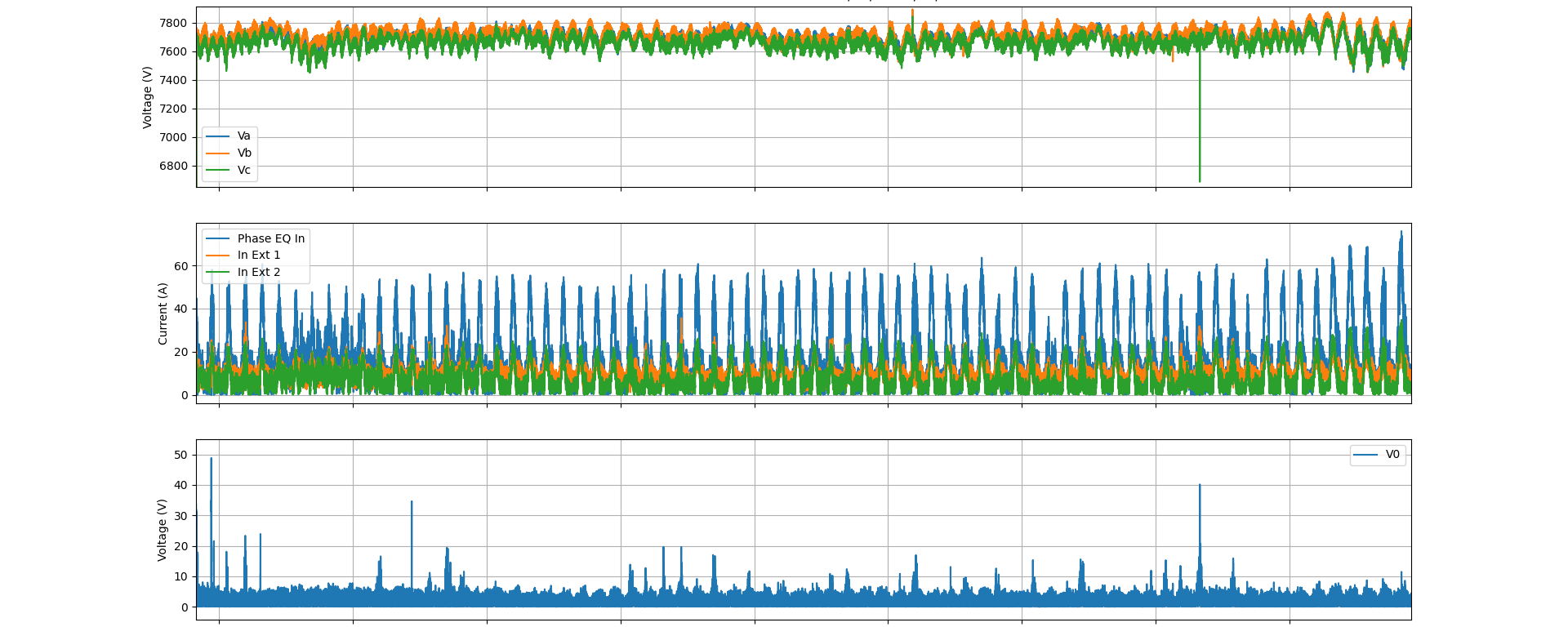
Rapid development on a West Texas feeder left phases badly imbalanced, with upwards of 100 A of neutral current and reclosers frequently tripping on neutral overload. Extending three-phase service to correct it would have cost millions.
The Phase-EQ corrected the problem at its source, driving zero-sequence imbalance close to zero and pulling voltage profiles together across all three phases.